landsadda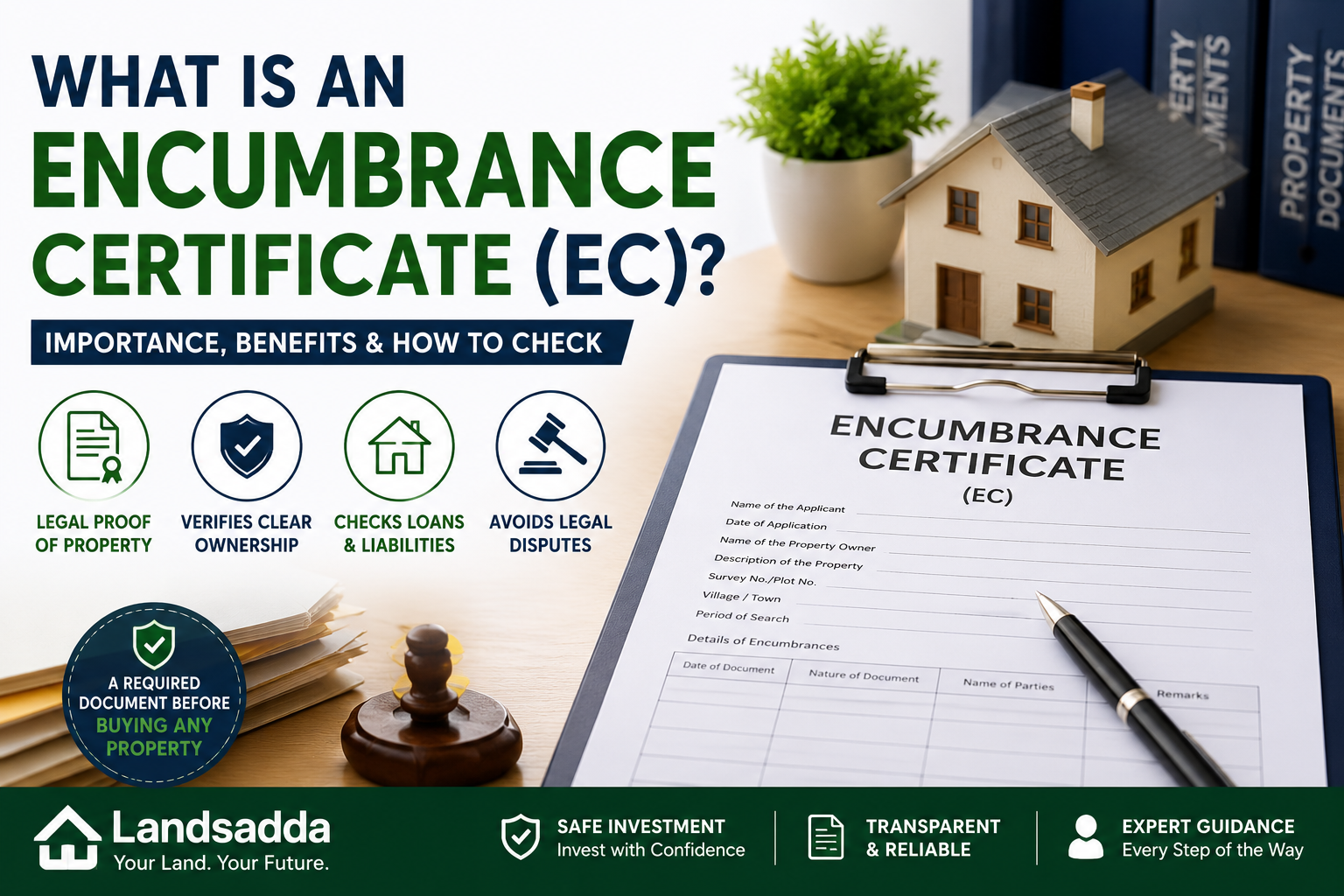
Introduction
When buying a property in Telangana, verifying legal documents is just as important as checking the location, price, and future growth potential. Many buyers focus only on the property’s appearance or investment returns and overlook critical legal documents that can protect them from future disputes.
One of the most important documents in real estate is the Encumbrance Certificate (EC). Whether you are purchasing an open plot, villa, apartment, or commercial property, checking the EC helps ensure that the property is free from legal and financial liabilities.
An Encumbrance Certificate provides valuable information about the property’s transaction history and helps buyers verify whether the property has been mortgaged, sold multiple times, or involved in legal disputes.
In this guide, Landsadda explains what an Encumbrance Certificate is, why it is important, how to obtain one, and how it helps protect your investment.
What is an Encumbrance Certificate (EC)?
An Encumbrance Certificate, commonly known as EC, is a legal document issued by the Registration Department that records all registered transactions related to a property over a specific period.
The certificate confirms whether the property is free from financial and legal liabilities.
Simply put, an EC helps buyers verify whether:
- The property has a loan against it
- The property has been legally transferred
- There are any registered claims or disputes
- Ownership history is clear
An EC acts as proof that the property is either free from encumbrances or carries recorded obligations.
What Does “Encumbrance” Mean?
An encumbrance refers to any legal or financial liability attached to a property.
Examples include:
- Home loans
- Mortgages
- Court attachments
- Property disputes
- Registered claims by third parties
If such obligations exist, they may affect ownership transfer and future property transactions.
Why is an Encumbrance Certificate Important?
1. Verifies Property Ownership
The EC provides a history of ownership transfers and registered transactions.
This helps buyers verify that the seller has legal rights to sell the property.
2. Confirms Property is Free from Loans
Before purchasing a property, buyers must ensure that there are no outstanding loans or mortgages.
An EC helps identify whether the property has been pledged as security to a bank or financial institution.
3. Protects Buyers from Legal Disputes
Property disputes can lead to financial losses and lengthy legal battles.
Checking the EC helps identify potential risks before investing.
4. Required for Home Loan Approvals
Most banks require an Encumbrance Certificate before approving a home loan.
A clean EC improves the chances of loan approval.
5. Essential for Property Registration
An EC is often required during:
- Property registration
- Ownership transfer
- Legal verification
- Property valuation
Types of Encumbrance Certificates
Form 15
Issued when the property has registered transactions during the requested period.
It includes:
- Sales
- Mortgages
- Transfers
- Gift deeds
- Leases
Form 16
Issued when there are no registered transactions during the requested period.
This is commonly called a “Nil Encumbrance Certificate.”
Information Available in an EC
An Encumbrance Certificate generally includes:
- Property owner details
- Survey number
- Property description
- Registration dates
- Transaction history
- Sale deeds
- Mortgage details
- Release deeds
This information helps buyers make informed decisions.
How to Check an Encumbrance Certificate in Telangana
Step 1: Collect Property Details
Keep the following information ready:
- Survey number
- Property address
- Owner details
- Registration details
Step 2: Visit the Registration Department
You can obtain an EC through the registration authority.
Alternatively, online services may be available depending on government regulations.
Step 3: Specify the Required Period
Most buyers request EC records covering:
- 13 years
- 20 years
- 30 years
Longer periods provide better verification.
Step 4: Review Transaction History
Carefully check:
- Ownership transfers
- Mortgage records
- Loan entries
- Release deeds
Step 5: Consult Real Estate Experts
Professional guidance helps identify hidden risks and legal concerns.
👉 Contact Landsadda for verified properties in Telangana.
How to Read an Encumbrance Certificate
When reviewing an EC, pay attention to:
Ownership Details
Verify the owner’s name matches the seller.
Mortgage Entries
Check for active loan obligations.
Property Description
Ensure dimensions and survey numbers match property records.
Registration Information
Verify all transactions are legally recorded.
Property Verification Checklist
Before buying property, verify:
| Verification Item | Importance |
|---|---|
| Sale Deed | Ownership transfer proof |
| Encumbrance Certificate | Liability verification |
| Title Deed | Ownership confirmation |
| HMDA/DTCP Approval | Legal development approval |
| Property Tax Records | Tax compliance |
| RERA Registration | Buyer protection |
Common Mistakes Buyers Should Avoid
Ignoring EC Verification
Many buyers trust sellers without reviewing legal records.
Checking Only Recent Records
Always request a longer transaction history.
Assuming Approved Layouts Are Risk-Free
Even approved layouts require document verification.
Not Consulting Experts
Professional verification reduces legal and financial risks.
Real Estate Insights for Telangana Buyers
Popular investment destinations such as:
- Kokapet
- Adibatla
- Shadnagar
- Tellapur
- Maheshwaram
- Sangareddy
continue to attract investors due to infrastructure development and appreciation potential.
However, document verification remains essential regardless of location.
Expert Tips from Landsadda
Always Request an EC Before Buying
Never purchase property without reviewing an Encumbrance Certificate.
Verify Ownership History
Check whether all previous transfers were legally registered.
Match Documents Carefully
Ensure the EC matches the sale deed and title deed.
Consult Trusted Professionals
Legal verification can prevent expensive mistakes.
👉 Get expert guidance from Landsadda today.
👉 Contact Landsadda for verified properties in Telangana.
Why Choose Landsadda?
Landsadda helps buyers make confident property decisions through:
- Property verification support
- Investment guidance
- Verified property listings
- Legal awareness resources
- Telangana real estate expertise
We help buyers invest safely and securely.
Frequently Asked Questions (FAQs)
1. What is an Encumbrance Certificate?
An Encumbrance Certificate is a legal document that records registered property transactions and liabilities.
2. Why is EC important when buying property?
It helps verify ownership history and confirms whether the property has loans or legal claims.
3. Can I get a home loan without an EC?
Most banks require an EC as part of the loan approval process.
4. What is a Nil Encumbrance Certificate?
A Nil EC indicates that no registered transactions occurred during the specified period.
5. How many years of EC should I check?
Property buyers commonly verify records for at least 13 to 30 years.
Conclusion
An Encumbrance Certificate is one of the most important legal documents in real estate. It helps buyers verify ownership history, identify liabilities, and avoid future disputes.
Whether you are investing in plots, villas, apartments, or commercial properties in Telangana, reviewing the EC should be a mandatory part of your due diligence process.
A few minutes spent verifying documents today can save years of legal and financial complications later.
Landsadda is committed to helping buyers find verified and legally secure properties across Telangana. Contact Landsadda today for expert property guidance and safe investment opportunities.