

Introduction
Buying a property is one of the most significant financial decisions a person can make. Whether you are purchasing an open plot, apartment, villa, or commercial property in Telangana, verifying legal documents is a crucial step before investing.
Many property disputes occur because buyers fail to check ownership records, legal approvals, and transaction history. While attractive prices and prime locations often influence buying decisions, legal verification should always come first.
Three of the most important documents every property buyer must understand are the Sale Deed, Encumbrance Certificate (EC), and Title Deed. These documents help establish ownership, verify legal status, and ensure the property is free from disputes.
In this guide, Landsadda explains these essential real estate documents, why they matter, and how they protect buyers from future legal and financial problems.
Why Property Documents Matter
Property documents provide legal proof regarding:
- Ownership
- Property history
- Transaction records
- Legal claims
- Loan liabilities
- Registration status
Before purchasing any property, document verification helps buyers avoid:
- Fraudulent transactions
- Ownership disputes
- Court cases
- Financial liabilities
- Registration issues
Proper documentation ensures a safe and secure investment.
What is a Sale Deed?
The Sale Deed is one of the most important legal documents in real estate. It acts as proof that ownership of a property has been legally transferred from the seller to the buyer.
Once the sale deed is registered with the government authority, the buyer becomes the lawful owner of the property.
Information Included in a Sale Deed
A Sale Deed generally contains:
- Buyer details
- Seller details
- Property description
- Plot dimensions
- Property location
- Sale consideration amount
- Registration details
- Rights transferred to the buyer
Why is a Sale Deed Important?
Legal Ownership Proof
The sale deed serves as primary evidence of ownership.
Mandatory for Registration
Property registration cannot be completed without a valid sale deed.
Future Property Transactions
A registered sale deed is required when:
- Selling the property
- Applying for loans
- Property transfers
- Legal verification
Checklist Before Accepting a Sale Deed
✔ Verify seller details
✔ Match property dimensions
✔ Confirm registration details
✔ Check signatures and witnesses
✔ Verify property boundaries
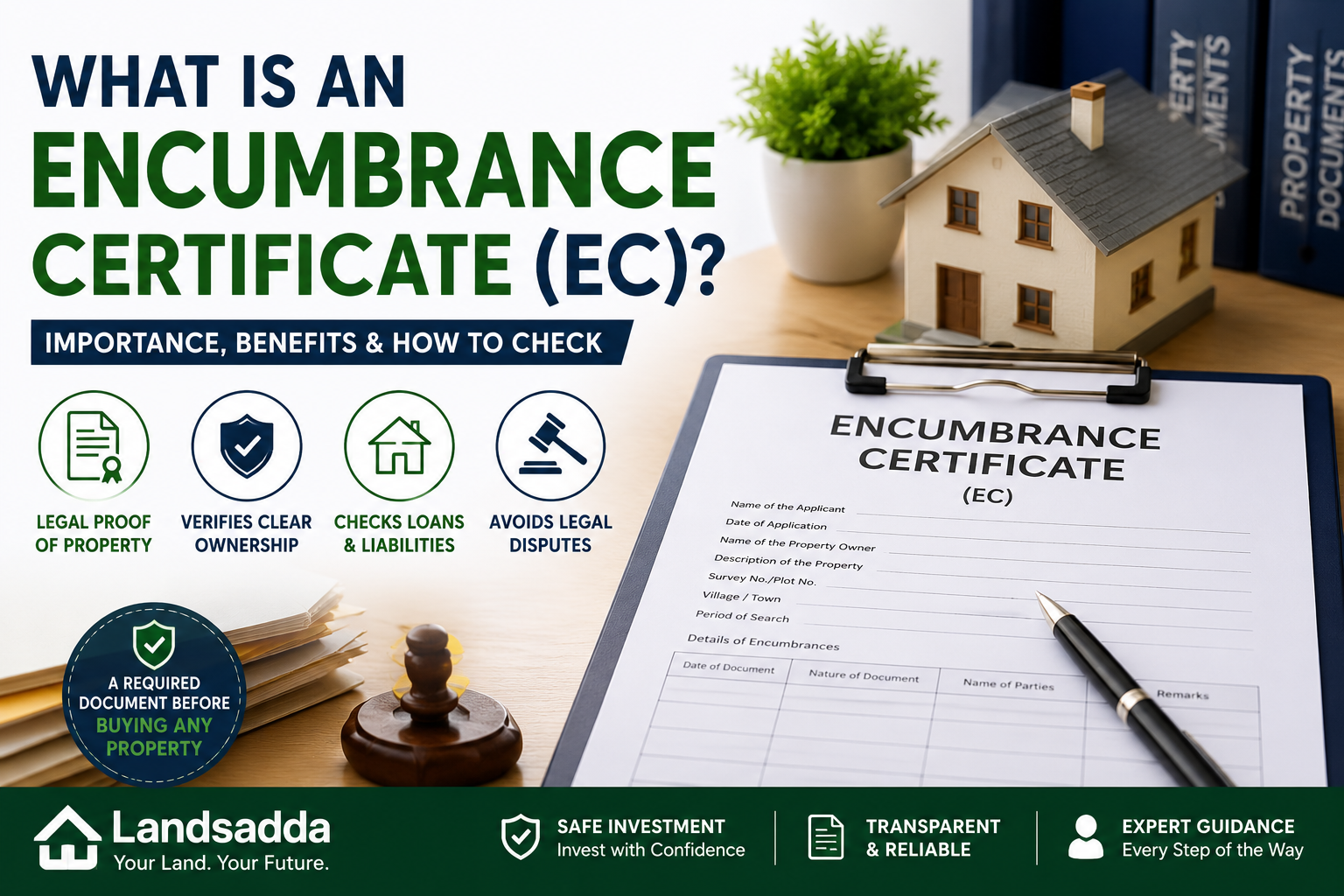
What is an Encumbrance Certificate (EC)?
An Encumbrance Certificate (EC) is a legal document that shows whether a property has any financial or legal liabilities.
It provides a record of all registered transactions associated with the property during a specific period.
What Does an EC Show?
The certificate helps identify:
- Property sale history
- Registered transactions
- Mortgages
- Loans against property
- Ownership transfers
- Financial obligations
Why is an EC Important?
Confirms Clear Ownership
A clean EC indicates the property has no registered legal liabilities.
Required for Home Loans
Banks often require an EC before approving loans.
Prevents Fraud
Buyers can identify whether the property has been pledged or mortgaged.
How to Check an EC?
You can obtain an Encumbrance Certificate through:
- Registration Department offices
- Online government portals
- Authorized property consultants
Pro Tip from Landsadda
Always request an EC covering at least the previous 13–30 years before purchasing any property.
What is a Title Deed?
A Title Deed is a legal document that proves ownership rights over a property.
It establishes who legally owns the property and whether ownership can be transferred without complications.
What Does a Title Deed Contain?
A Title Deed generally includes:
- Current owner details
- Previous ownership records
- Property boundaries
- Survey numbers
- Ownership rights
- Legal descriptions
Why is a Title Deed Important?
Establishes Ownership
The title deed confirms the seller has legal rights to sell the property.
Reduces Legal Risks
A clear title helps avoid disputes related to ownership claims.
Supports Future Transactions
A verified title deed simplifies:
- Property sales
- Property inheritance
- Loan approvals
What is a Clear Title?
A clear title means:
- No ownership disputes
- No legal claims
- No pending litigation
- Proper ownership records
Always verify that the property has a marketable and clear title before investing.
Difference Between Sale Deed, EC & Title Deed
| Document | Purpose | Importance |
|---|---|---|
| Sale Deed | Transfers ownership | Legal proof of sale |
| Encumbrance Certificate | Shows liabilities | Verifies financial status |
| Title Deed | Proves ownership | Confirms legal ownership |
All three documents serve different purposes and should be verified before purchasing property.
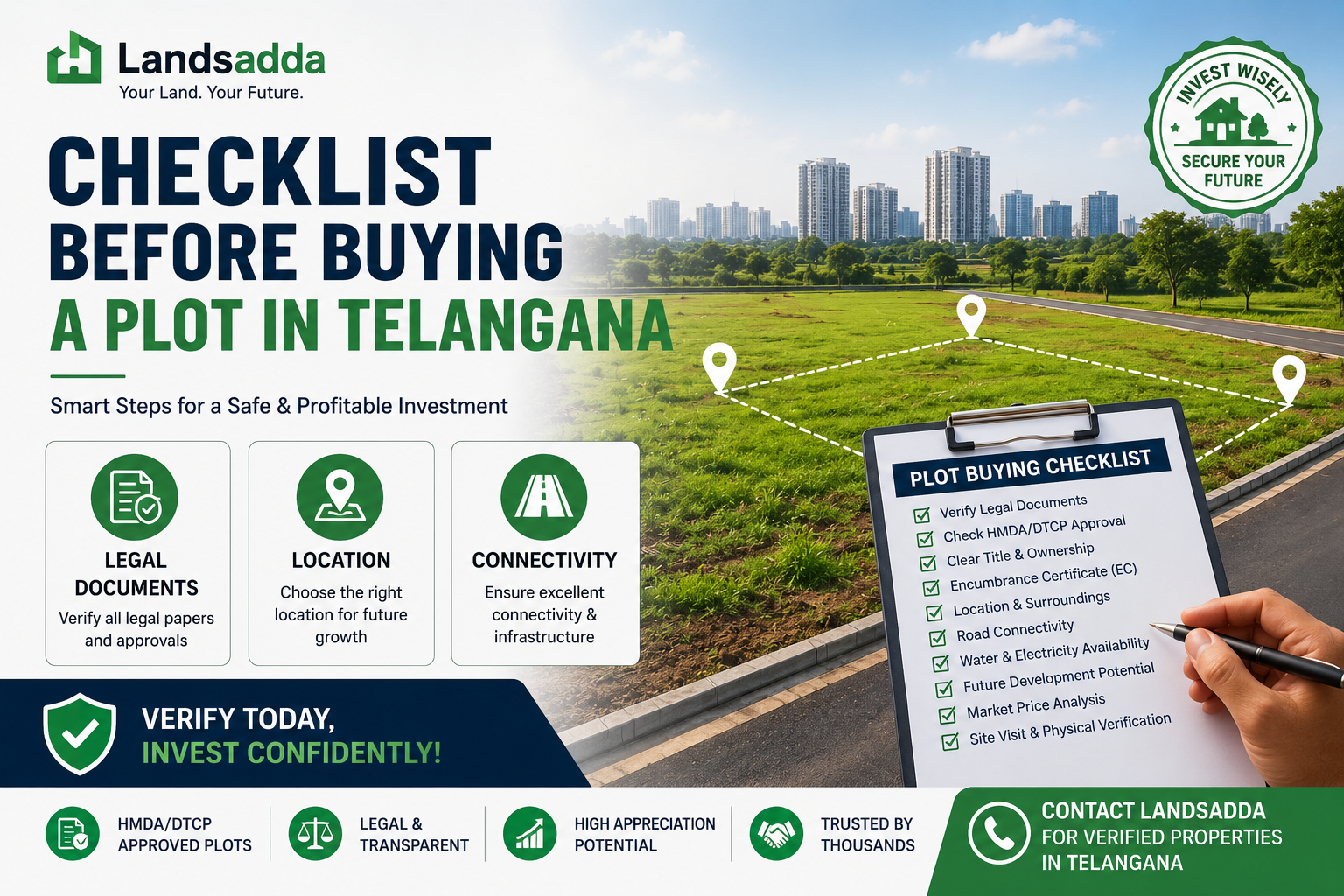
Property Document Verification Checklist
Before buying any property in Telangana, verify the following:
Ownership Verification
✔ Title Deed
✔ Previous ownership records
Transaction Verification
✔ Sale Deed
✔ Registration details
Liability Verification
✔ Encumbrance Certificate
✔ Loan clearance documents
Government Approvals
✔ HMDA approval
✔ DTCP approval
✔ RERA registration
Tax Verification
✔ Property tax receipts
✔ Land revenue records
Common Mistakes Buyers Should Avoid
Ignoring Document Verification
Never rely solely on verbal assurances from sellers.
Not Checking Previous Ownership
Always verify ownership history.
Purchasing Property Without EC
A missing EC can hide loans or disputes.
Skipping Legal Consultation
Professional legal verification can save buyers from costly mistakes.
Real Estate Insights for Telangana Buyers
Areas such as:
- Kokapet
- Adibatla
- Shadnagar
- Tellapur
- Maheshwaram
- Sangareddy
continue to attract investors because of infrastructure growth and appreciation potential.
However, regardless of location, document verification remains essential before making any purchase decision.
Expert Advice from Landsadda
Verify Before You Invest
Never purchase a property without reviewing legal documents.
Work with Trusted Professionals
Experienced real estate advisors can help identify risks.
Check Government Approvals
Ensure layouts are approved by relevant authorities.
Maintain Documentation Records
Keep copies of all registered documents for future reference.
👉 Contact Landsadda for verified properties in Telangana.
👉 Get expert guidance from Landsadda today.
Why Choose Landsadda?
Landsadda helps property buyers make informed decisions through:
- Property verification support
- Real estate guidance
- Approved property listings
- Investment consultation
- Telangana market insights
Our goal is to help buyers invest safely and confidently.
Frequently Asked Questions (FAQs)
1. What is the most important document when buying property?
The Sale Deed is one of the most important documents because it legally transfers ownership.
2. Why is an Encumbrance Certificate required?
An EC helps verify whether the property has loans, mortgages, or legal liabilities.
3. How can I verify a property’s ownership?
Ownership can be verified through the Title Deed and supporting ownership records.
4. Can I buy property without checking legal documents?
It is strongly recommended to verify all legal documents before purchasing any property.
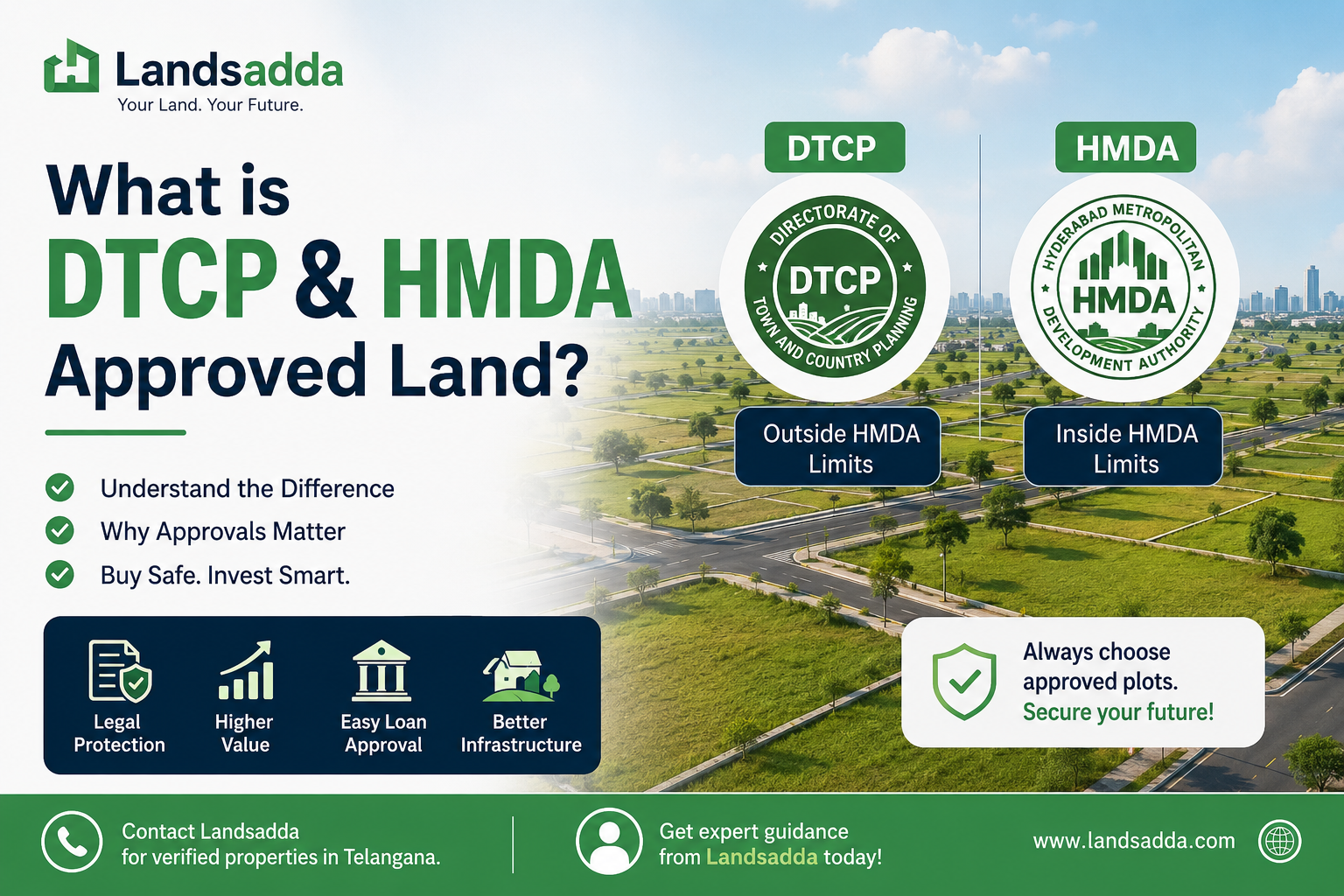
5. Are HMDA and DTCP approvals important?
Yes. Government approvals help ensure the property complies with planning regulations and reduces legal risks.
Conclusion
Understanding important real estate documents is essential for making safe property investments. The Sale Deed, Encumbrance Certificate, and Title Deed play critical roles in verifying ownership, transaction history, and legal status.
Before purchasing any plot, apartment, villa, or commercial property in Telangana, always verify these documents carefully. A little due diligence today can prevent major legal and financial problems in the future.
Landsadda is committed to helping buyers find verified and legally secure properties across Telangana. Contact Landsadda today for expert guidance and trusted real estate support.






Leave a Reply