landsadda
What is Real Estate?
Real estate is one of the world’s largest and most valuable industries. Whether you plan to buy your first plot, invest in a commercial property, become a real estate agent, or simply understand how the property market works, learning the basics is the first step.
In simple terms, real estate refers to land and everything permanently attached to it, such as houses, apartments, office buildings, warehouses, roads, and other structures. Unlike movable assets such as vehicles or furniture, real estate is immovable property.
As India’s infrastructure continues to expand, cities like Hyderabad, Bengaluru, Pune, and Chennai are creating exciting opportunities for buyers and investors. Understanding what real estate is can help you make informed decisions and avoid costly mistakes.
Table of Contents
- What is Real Estate?
- Why Real Estate Matters
- Types of Real Estate
- Components of Real Estate
- How the Indian Real Estate Market Works
- Benefits of Investing in Real Estate
- Risks You Should Know
- How Beginners Can Start
- Common Real Estate Terms
- Frequently Asked Questions
- Conclusion
Why is Real Estate Important?
Real estate plays a significant role in every country’s economy. It supports housing, businesses, industries, infrastructure development, and employment.
Some of the reasons why real estate is important include:
- Creates long-term wealth
- Generates rental income
- Appreciates in value over time
- Offers tax advantages in many situations
- Supports business expansion
- Provides financial security
Moreover, the real estate sector contributes significantly to India’s GDP and continues to attract both domestic and international investors.
Types of Real Estate
Understanding the different categories of real estate helps buyers choose the right property based on their goals.
1. Residential Real Estate
Residential real estate includes properties where people live.
Examples include:
- Independent houses
- Villas
- Apartments
- Flats
- Duplex homes
- Residential plots
- Gated communities
This category is the most popular among first-time buyers and families.
2. Commercial Real Estate
Commercial properties are used for business purposes.
Examples:
- Office spaces
- Shopping malls
- Retail stores
- Hotels
- Restaurants
- Business parks
Commercial properties often generate rental income and may provide higher returns than residential properties, although they can require a larger investment.
3. Industrial Real Estate
Industrial real estate supports manufacturing and logistics.
Examples:
- Factories
- Warehouses
- Industrial parks
- Distribution centers
- Manufacturing units
With the growth of e-commerce and logistics, demand for industrial properties has increased across India.
4. Agricultural Real Estate
Agricultural land is used for farming and related activities.
Examples include:
- Farmland
- Orchards
- Plantations
- Dairy farms
Before purchasing agricultural land, buyers should understand local regulations regarding ownership and land use.
Components of Real Estate
Every real estate property typically consists of the following elements:
Land
The physical piece of land that forms the foundation of the property.
Improvements
Permanent additions such as buildings, roads, walls, drainage systems, and landscaping.
Natural Resources
Resources like water bodies, trees, minerals, and other natural features that may add value to the land.
Legal Rights
Ownership includes legal rights to use, sell, lease, or transfer the property, subject to applicable laws.
How Does the Indian Real Estate Market Work?
The Indian real estate market involves multiple stakeholders working together.
These include:
- Property owners
- Buyers
- Builders
- Developers
- Real estate consultants
- Banks and financial institutions
- Government authorities
- Registration departments
- RERA authorities
Before purchasing a property, buyers should verify approvals, legal documents, and ownership details.
Benefits of Investing in Real Estate
Real estate continues to be a preferred investment option because of its long-term potential.
Wealth Creation
Property values may increase over time, helping investors build wealth.
Passive Income
Rental properties can provide a steady monthly income.
Portfolio Diversification
Including real estate in an investment portfolio can reduce dependence on a single asset class.
Inflation Protection
Property values and rental income often rise over the long term, helping preserve purchasing power.
Tangible Asset
Unlike digital investments, real estate is a physical asset that many investors value for its stability.
Risks of Real Estate Investment
While real estate has many advantages, buyers should also consider potential risks.
These include:
- Market fluctuations
- Legal disputes
- Delays in project completion
- Poor location selection
- Low liquidity
- Maintenance costs
Proper research and document verification can help reduce these risks.
How Beginners Can Start in Real Estate
If you are new to the industry, consider these steps:
- Learn the basics of property ownership.
- Understand local market trends.
- Research different locations.
- Verify legal approvals.
- Create a realistic budget.
- Compare multiple properties.
- Consult trusted professionals.
- Visit the site before making a decision.
- Read all agreements carefully.
- Think about your long-term goals before investing.
Common Real Estate Terms
Property
A piece of land or a building owned by an individual or organization.
Plot
A defined parcel of land available for construction or investment.
RERA
The Real Estate (Regulation and Development) Act promotes transparency and protects home buyers in India.
Registry
The legal process of transferring property ownership.
Appreciation
An increase in the value of a property over time.
Pro Tips
- Always verify ownership documents.
- Check RERA registration where applicable.
- Visit the property personally.
- Compare nearby market prices.
- Consider future infrastructure development before investing.
Common Mistakes to Avoid
- Buying without legal verification.
- Ignoring location and connectivity.
- Depending only on advertisements.
- Skipping site visits.
- Not calculating the total purchase cost.
- Failing to check government approvals.
Frequently Asked Questions
What is real estate in simple words?
Real estate refers to land and any permanent structures built on it, such as homes, apartments, offices, or commercial buildings.
Is land considered real estate?
Yes. Land is one of the primary forms of real estate and is often purchased for construction, farming, or long-term investment.
What are the four main types of real estate?
The four major categories are residential, commercial, industrial, and agricultural real estate.
Why is real estate a popular investment?
Many people invest in real estate because it can generate rental income, appreciate over time, and provide a tangible long-term asset.
Can beginners invest in real estate?
Yes. With proper planning, budgeting, legal verification, and market research, beginners can start investing confidently.
What documents should buyers verify?
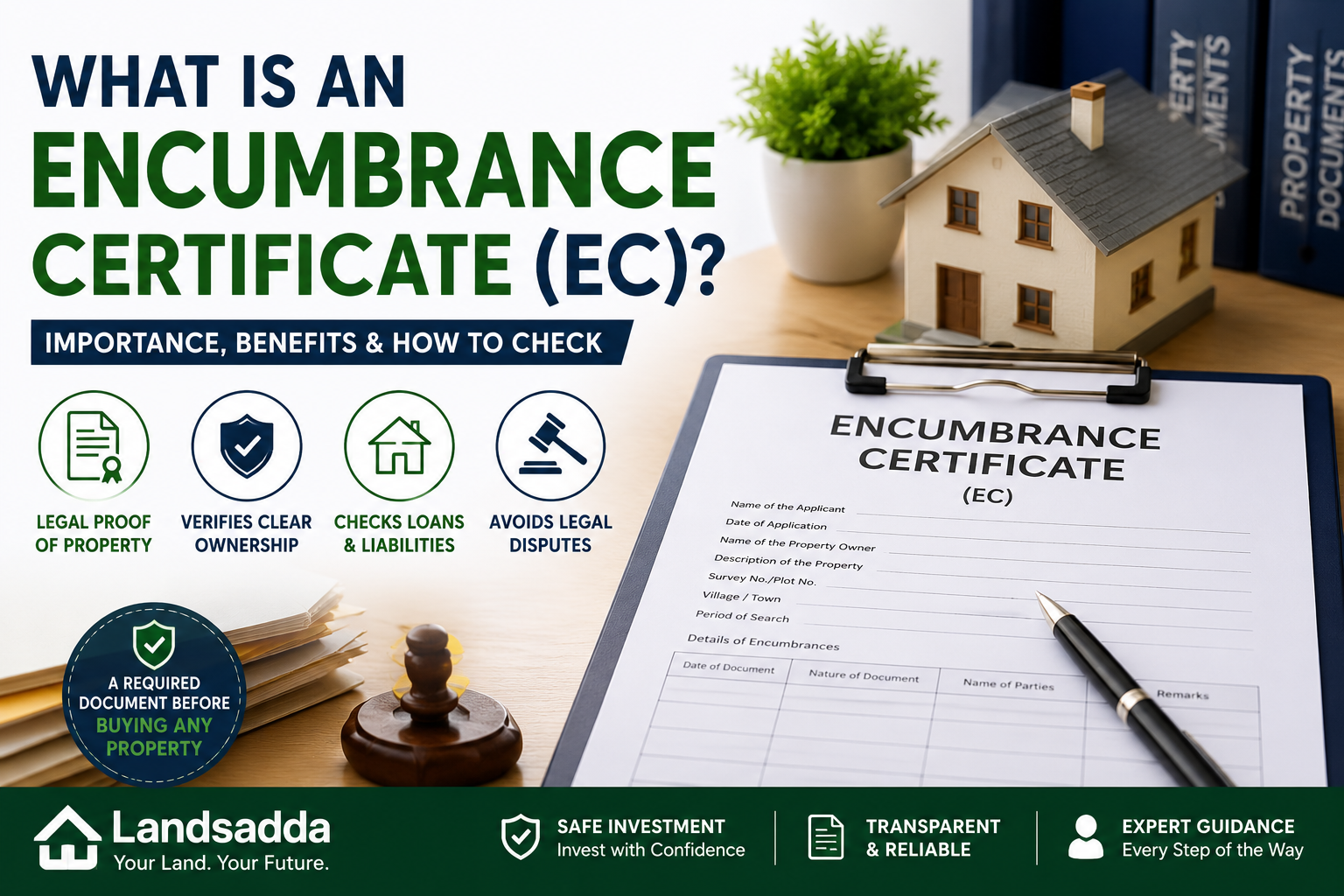
Important documents include the title deed, sale deed, encumbrance certificate, approved layout plans, tax receipts, and RERA registration where applicable.
Is location important in real estate?
Yes. Location influences property value, rental demand, accessibility, and future appreciation potential.
Does real estate always increase in value?
Not always. Property values depend on factors such as market conditions, infrastructure development, demand, and local regulations.
Conclusion
Understanding what real estate is is the foundation of making smart property decisions. From residential homes and commercial buildings to industrial facilities and agricultural land, real estate offers a wide range of opportunities for homeowners, investors, and professionals.
Whether you are planning to buy your first plot, invest for the future, or build a career in the property industry, gaining the right knowledge is essential. At LandsAdda, our mission is to simplify real estate by providing reliable guides, practical tips, and educational resources to help you make informed decisions with confidence.